Building Consensus at Scale
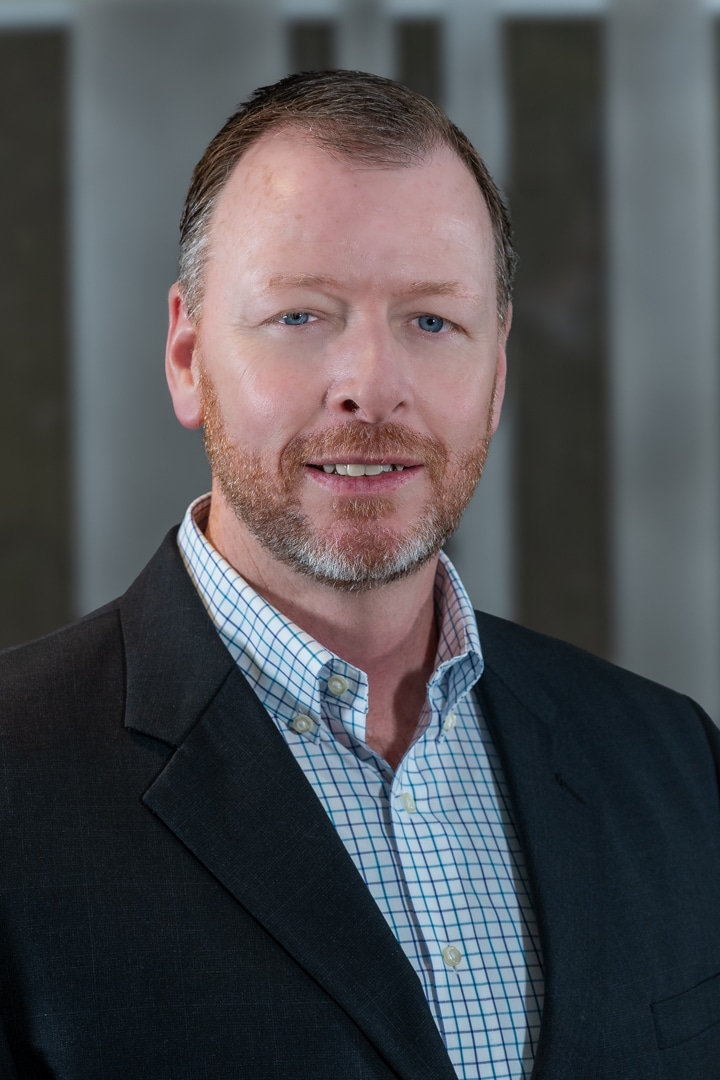
The grocery industry's biggest innovations don't happen in a single boardroom. They require getting thousands of competitors to actually work together. As Vice President of Industry Relations for FMI, The Food Industry Association, Doug Baker spends his days doing exactly that: aligning retailers, wholesalers, and manufacturers who normally guard their strategies like trade secrets. When hurricanes hit or supply chains snap, these companies need each other. Baker builds the systems that make that possible. His take on innovation challenges the usual narrative. Sometimes progress isn't about one company racing ahead. It's about getting an entire industry to move at the same time.
1. What does innovation mean to you?
For me, innovation is always looking forward, challenging the status quo, and having the courage to be wrong.
2. How does your team generate new ideas?
Most of our team’s new ideas come from listening to our FMI members and what challenges or opportunities they’re addressing.
3. Do you have any specific rituals for resetting your team to be creative?
I know most might live by the adage, “if it isn't broke, don’t fix it,” but we’re pushing that envelope a bit. In June of 2026, FMI will host a new conference called GroceryLab. The title is meant to encourage experimentation to find new ways to address both old and new problems. One way we’re embracing this at FMI is by challenging ourselves to build this forum differently than we have any of our other annual events.
4. How are you leveraging AI in your innovation process? What are some unexpected benefits or challenges you have encountered with AI adoption?
Today, with the pace of technology, how we work and live is being altered daily. As a result, we’ve adopted the saying, “teach me to fish.” We’ve each taken on the challenge to find one new way to use the growing number of AI use cases to make ourselves more efficient, creative, and innovative and then teaching the others on the team, “how to fish.” For one example, FMI produces a large number of primary and secondary research products each year. A daunting task for staff and members to read through or find the nugget they need to efficiently address an issue or opportunity. As a result, FMI has been working on the development of an Generative AI Bot that will move searches from SEO to AEO.
5. How do you identify trends? What resources does your team use to spot trends and consumer insights?
Spotting trends, whether consumer-driven or operational, is one of the few primary reasons our members join FMI. To accomplish this, FMI has established several collaborative relationships that include syndicated data providers, research firms, consultancy firms, academic institution partnerships, and others that are associate members of FMI. This allows us to get much closer to the source of the trend and ensure our primary members, who are grocery retailers, wholesalers, and product manufacturers, have the insight early enough to address its impact.
6. What is the biggest challenge you face when innovating?
I would say that culture and courage are two areas that we often remind ourselves can be the death of a great idea. Some of that is due to being a member-owned organization and wanting to ensure we’re using the dollars our members invest in us responsibly and with an eye to positive impact for them, the industry, and the association.
7. Has there ever been an instance where another industry has influenced an innovation FMI?
To ensure we capture all possible aspects and impacts of a trend, policy, or operational element, we often work across sectors. One example is our work with and through the All Hazards Consortium to address natural disasters and supply chain resilience. To ensure communities are cared for at their most critical time, it’s imperative that the grocery industry work closely with all sectors, like electric, communications, rail, transportation, and public sectors, such as emergency operations and CISA. Through this cohort, we have established a communication link that brings everyone to the exact moment of need. As a result, awareness and response have been shortened, allowing businesses and communities to recover more quickly than they had in the past.
8. What makes an innovative culture? How do you create a culture of innovation?
An innovative culture isn’t something you announce. It’s also not an annual initiative, it must be a weekly habit that takes courage from everyone in the organization to foster an environment that allows the team to speak up, challenge assumptions, and offer sometimes unconventional ideas without fear of embarrassment or punishment.
9. Looking to the future, how will FMI continue to be a leader in innovation?
The FMI team has worked with a steadfast focus on its members’ needs to gain the trust it’s earned. The organization will remain a leader in innovation by doing what no individual company in the food ecosystem can do alone: align the industry on shared problems, accelerate practical solutions, and create the conditions where innovation scales beyond pilots.