Engineering Innovation
An Interview with Dr. Christian Mühlroth, CEO of ITONICS
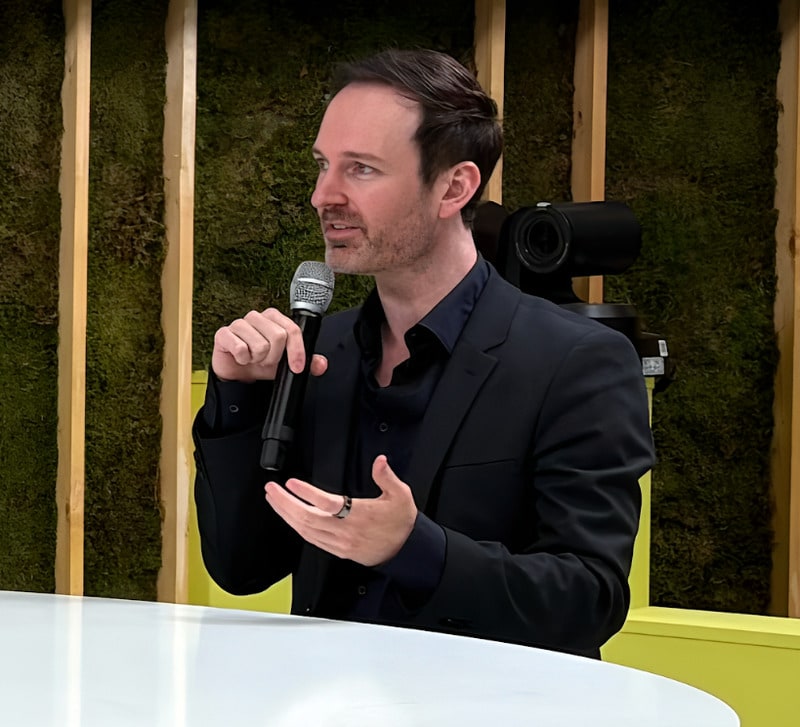 Christian is the CEO of ITONICS, the innovation operating system designed to ensure innovation delivers measurable results. With a background in engineering and a passion for high-stakes technical complexity, Chris brings a unique perspective on innovation culture, AI adoption, and what it takes to build teams that consistently break new ground. In this interview, he shares insights on why innovation has become a survival imperative, how AI is reshaping ideation processes, and why hiring for attitude over experience might be the most critical innovation decision a company can make.
1. What does innovation mean to you?
It's a big question because innovation isn't new to the world. Any company that started and had tremendous success started with something innovative—a product, a solution to a problem. But these days, where things are getting faster and faster and we're entering the intelligence era, innovation is survival. It's survival on a personal level because you need to do things differently to succeed and thrive. It's also survival on a corporate level because there's just so much competition. It's so easy to spin up a company, to become an entrepreneur and build the next billion-dollar business within a year — get some funding from a VC or PE firm.
It's much more competitive than maybe a year ago or two years ago. Innovation is basically survival.
2. How does your team generate new ideas?
It's a combination of human intent and machine intelligence these days. Machines — specifically AI and all the tools you hear about — have become very intelligent, and it's super disruptive because in many ways, AI has better ideas than I do, or even parts of my team. But you need to direct it. You need the intention — go left, go right, dive into that topic, be more precise. It's a combination of human intent and human ingenuity with machine intelligence that gives you better results these days.
3. Do you have any specific rituals for resetting your team to be creative?
Yeah, it's actually about immersing into the reality of our clients. Typically we work with assumptions — we think we know how their daily job works, what they do all day long, what their concerns are, what their problems and fears are. In fact, we don't, because we're not in their shoes. Actually talking to them, going there, completely gives you a different view of what you want to solve and what the problem actually is. Then you go back and try to make a product out of it or integrate it into your product.
Field immersion is super important. Lower your assumptions and make sure you listen first. We have two ears and one mouth for a reason: listen first, then speak.
4. How are you leveraging AI in your innovation process? What are some unexpected benefits or challenges you've encountered with AI adoption?
First of all, when you collect all the data from clients and the observations you have, it's about combining human intent with making sense out of the data. AI is good for creativity, for challenging you, for coming up with something original.
Just this year, we actually did an experiment with one of our larger clients from Germany. We ran a big ideation challenge and set up a competition between humans versus AI. We had a group of humans come up with ideas about how to find new use cases for industrial metaverse applications — what could we possibly invent and make clients pay for. Then we had AI do the same job, giving it context and data.
We had judges evaluate whether these ideas might actually be helpful, whether we might be able to sell them in the future. But the judges didn't know who created the ideas — was it the human group or the AI? We pulled back the curtain after they judged, and it turns out they rated the AI ideas as better than the human ideas. They were shocked because they thought, "Wow, we have hundreds of people here working on ideas, investing so much time, and actually the AI can at least keep up with it." And it's just 2025, so maybe next year this is going to be even bigger because those models advance so fast.
The unexpected part? Everyone expected AI couldn't really do this kind of work. But with just a little bit more context on what the company wants to achieve, AI produced at least the same quality—maybe even better—than the hours, the weeks, the teams invested in coming up with those ideas. It's just a glimpse of where this could all go in the next couple of years.
The challenge? AI is eating up the innovation process from left to right. It started with discovery processes—trend scouting, tech scouting. Trend Hunter has a fantastic GPT, for example. But it's eating up more and more human labor-intensive tasks throughout the process. It's not going to be able to execute yet, but there are agents right now that can write code. For well-scoped tasks, today’s AIs can produce code that rivals entry-level, and at times seasoned, developers. It's progressively automating more stages of the innovation process. Let's see what happens in a year from now, but it's super exciting.
If you're already employed and not using AI, you're at a competitive disadvantage. If you're finishing college or university and trying to get a job as a software developer, you'll succeed if you come with AI skills. If you don't, there's somebody who already uses AI tools for coding, which makes them 10 times better in terms of speed and quality. They're going to outperform you in job interviews and on the job. It's forcing you to use that kind of technology.
But there's nothing new here. If you go back decades into the past, we've seen other technologies do the same thing. Back in the day, if you didn't use electricity and just ran on something completely off-grid for building products, you had a competitive disadvantage. It's the same for AI technology these days. It just keeps repeating itself.
5. How do you identify trends? What resources does your team use to spot trends and consumer insights?
It depends a lot on the data, to be honest. If you just use general-purpose models like ChatGPT, it can only get you so far. We actually use many different data sources.
We use scientific papers to understand what's happening in the research community right now — who's researching what topic. We look at patents to understand the competitive position, which companies are securing which intellectual property. Then there's news, curated databases, and funding data on startups — where big money is going, because that's typically a strong indicator that something is going to emerge there.
If you take that data and use human intent to ask it the right way, you can easily uncover trends. We don't do it for ourselves but specifically for our clients, and it's much more specific than going to ChatGPT or any general-purpose model. And of course, using Trend Hunter's GPT is well recommended as well.
6. What is the biggest challenge you face when innovating?
The biggest challenge is convincing people they should change. There's no such thing as a company innovating — it's people doing stuff. A company is just made out of people, processes, and politics, but ultimately it's people.
If you have a good business that's producing decent returns or profit, why change? If you have senior management in position for three or four years and they're doing well, the bonus is great — how do you convince them to actually change if they're making good money? Three or four years down the line, there's just another person who comes in, maybe the next CEO, and they have to care about the problem.
It's different in different regions of the world where you have leadership that tends to be 10 or 20 years into a job, or maybe family-owned businesses who think more in generations. It's much simpler to convince them to change, to do something new, to try something out. But with fast-paced leadership changes in organizations, making it clear to people that they need to change is the hardest part.
There are great examples from the world — country leaders in specific regions who tend to have multi-year plans, maybe even plans for decades. You can look to Germany, where we have some family-owned businesses run by the family for generations. They tend to have the right level of foresight and risk-taking because the company is their asset, their legacy for their children, for their people. They're much more interested in foresight — understanding what's next, where the risk is coming from, where opportunity is coming from — and building something that lasts over generations versus other types of engagements.
7. Has there ever been an instance where another industry has influenced an innovation at ITONICS?
Any industry that has very high technical complexity — like engineering complexity in automotive, aerospace, robotics — is really inspiring to see, and that's certainly influenced a lot of what we do.
Ultimately, innovation comes down to an engineering problem. How do you source resources — whether that's people, money, or a team — and then put them through an innovation process to make something happen? Much of it, if you boil it down, feels like an engineering problem. Companies in high-stakes engineering environments typically have brilliant people with ambition and attitude, and it's very interesting to get inspired by them.
Good engineering is really hard. It's a little more simple to come up with a website and a digital app these days, but building a rocket or processing satellite imagery? That's hard. Learning how those teams address problems, how they assemble really high-performing teams — that's something that's really inspiring and that we should definitely look into.
8. What makes an innovative culture? How do you create a culture of innovation?
The question about innovation culture has been around forever, and I think maybe it's not the right question. Culture is defined by people, not by PowerPoint, not by processes, not by politics. Culture is defined by the people who come together to form a group, form a company.
Culture starts at the hiring process. You need to look for attitude and ambition over experience. If you assemble a great team who has attitude and ambition, they can make their own experiences. But if the team doesn't have it, it's super hard to inject a certain type of culture or have HR come up with PowerPoint slides telling them how to behave.
It starts at the hiring process — getting the right people. Then you have a great culture. If they're curious, they want to explore, they're smart, they're hardworking — there you go, that's your culture.
In rigid 9-to-5 cultures, sustained innovation is hard; flexibility beats rigidity in this case. For example, I get bursts of creativity in the evening. You need flexibility for that.
9. Looking to the future, how will ITONICS continue to be a leader in innovation?
I'd let others judge whether we're leading innovation or not, but I think it comes down to what we just discussed: curiosity, exploration, and having the right attitude. Whether it's innovation, whether it's in life, whether it's in engineering—it doesn't really matter. You need to have people around you that have the right level of attitude and ambition. Then it just naturally follows.
But if you're surrounded by low-curiosity people, it just doesn't work.
References: itonics-innovation, linkedin