Founder's Corner: Turning Breath Into Data
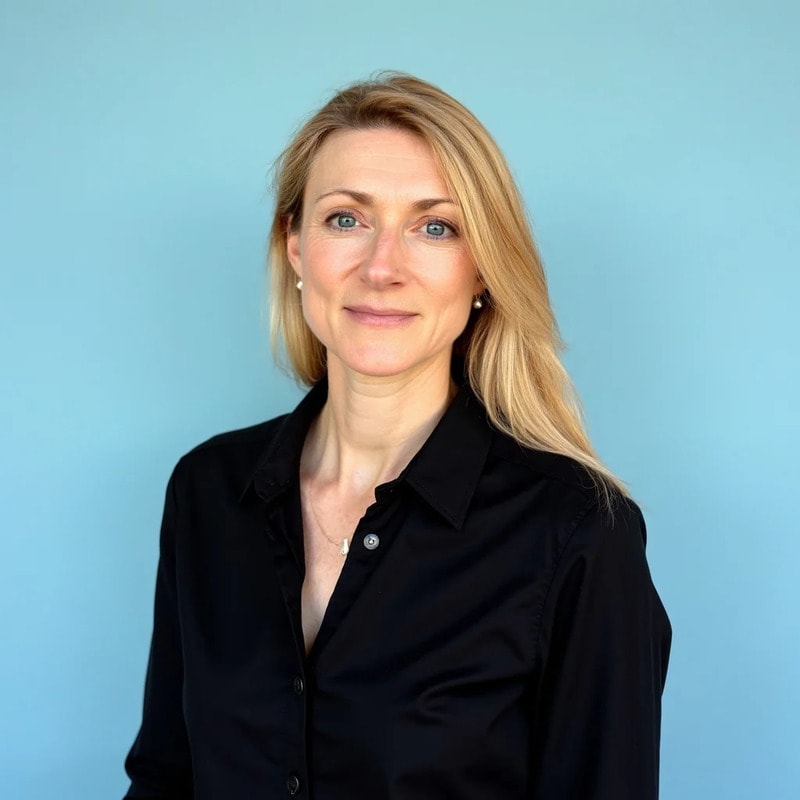
Celine Vignal knows chronic pain from the inside out. After decades of living with migraines, she stopped waiting for relief and started building it—founding Seesaw Health to give women what the wellness industry rarely delivers: physiological proof that what they're doing is working. Her approach pairs breathwork with biosensing technology, turning nervous system regulation from abstract concept into measurable skill.
In this interview, Vignal discusses why more data isn't always better, how gamification became a clinical decision, and what it means to design health tools for women whose symptoms have been dismissed for too long.
1. What was the spark that first led you to start Seesaw Health?
It was personal, and honestly, it was desperation. I’d been living with chronic migraine for decades, and I could feel these waves: inflammation surges, hormonal ups and downs, and then my system is stuck, stressed, overloaded and weakened. I found myself asking a question that wouldn’t leave me alone: what if I could help my nervous system get out of fight-or-flight mode efficiently?
I knew breathwork, specifically slow, paced breathing, helps regulate the nervous system, and can reduce flare-ups severity and also helps with anxiety, but I didn’t want “hope” or a wellness trend. I wanted physiological feedback I could trust. That’s what became the foundation of Seesaw Health: a biosensor + app designed to help women reset their nervous system with real data and a breathwork practice they can actually stick with.
2. How has your vision for the company evolved since those early days?
In the beginning, my vision was: “make breathwork easier.” Over time, it became: “make nervous system regulation measurable and repeatable, especially for women whose symptoms are cyclical and often dismissed.”
So Seesaw Health evolved into a platform that pairs guided breathwork with biosensing, not continuous tracking for the sake of tracking, but measuring the body’s parasympathetic response to a controlled stimulus like 0.1 Hz breathing. That shift changed everything: from self-care content to a tool for building resilience using real-time signals like HRV and respiration patterns.
3. What’s a pivotal moment or decision that shaped the company’s trajectory?
A pivotal moment was deciding that if we were going to help people consistently, the experience couldn’t feel like homework. Breathwork works—if you do it—and when you’re dealing with pain, fatigue, migraines, or hormonal swings, compliance is the real obstacle.
So we made a creative decision early: turn sessions into games you play with your breath, and pair that with a handheld biosensor (the Egg) so you can see the shift in your nervous system, not just guess. That combination, gamification + physiology, became our trajectory.
4. How do you stay connected to new ideas and emerging trends?
I use three filters.
- Women’s real life experience: I pay attention to patterns women share about inflammation, stress load, cycle-related symptoms, and being told “everything looks normal.” That feedback loop shaped our mission and roadmap.
- Physiology over hype: I look for approaches that connect directly to autonomic regulation and measurable signals like HRV and respiratory rhythm.
- Practical behavior design: I care about what fits into real life: brief sessions, engaging experiences, and progress you can see, since consistency compounds over time.
5. What’s a piece of advice or perspective you hold that most people might disagree with?
A lot of people think more data is always better. I disagree. In health, more data often becomes more anxiety.
I believe the future is “data that trains you”,measuring the body’s response to an intentional action, then teaching you how to reliably shift your state. That’s why we focus on the parasympathetic response to a controlled stimulus rather than trying to track everything all the time.
6. What’s a moment when your team took a creative risk — and what did you take away from it?
Our creative risk was building a serious physiology product that’s playful on purpose. We leaned into a game-based experience because women don’t need another lecture, they need something that fits into real life and feels rewarding even on hard days.
The takeaway: in women’s health, engagement isn’t a marketing metric, it’s clinical. If the tool isn’t used consistently, it doesn’t matter how good the science is. Designing for delight can be a scientific decision.
7. Looking ahead, what excites you most about where your company — or your industry — is going?
I’m excited that women’s health is finally moving from “symptom journaling” toward objective, real-time signals that validate experience and guide action.
For Seesaw Health, what excites me most is scaling the idea that nervous system regulation can be trained, like a skill, using a simple biosensor and an app that makes the process intuitive and measurable. The goal is to help women experience fewer flare-ups, recover faster when symptoms hit, and build real autonomy in self-care, especially during hormonal shifts, when the nervous system and inflammation can feel like they’re driving the bus!