Trend Hunter’s Six Patterns of Opportunity: Convergence


Some of the most exciting innovation doesn’t come from a single idea, it comes from the collision of multiple forces. As industries blur and consumer expectations expand, combination becomes a powerful driver of opportunity.
Trend Hunter’s methodology is grounded in two enduring frameworks: the 6 Patterns of Opportunity and the 18 Megatrends. The Patterns (Acceleration, Cyclicality, Redirection, Reduction, Convergence, and Divergence) outline six strategic pathways businesses use to build future-ready innovation, shaped by thousands of conversations with entrepreneurs, brands, and industry leaders. Each Pattern maps to three Megatrends, connecting innovation strategy to the deeper consumer desires shaping the future.
In this article, we’ll explore Convergence, the Pattern of Opportunity rooted in collaboration, hybrid thinking, and the power of combining ideas into something new.

What Is Convergence?
Innovation is often imagined as a breakthrough moment, one big idea that changes everything. But increasingly, the most powerful innovations aren’t singular; they’re combinations.
Convergence is the Pattern of Opportunity built on the power of alignment: merging multiple ideas, industries, features, or communities into one offering that creates broader appeal and deeper value.
Convergence is innovation through integration.
It asks:
- What happens when two needs are met at once?
- What happens when physical and digital merge?
- What happens when collaboration unlocks something neither brand could create alone?
In a world where consumers expect more from every interaction, Convergence is how brands expand relevance by bringing forces together.
Why Convergence Matters Now
The modern consumer doesn’t experience life in silos.
They don’t separate:
- online from offline
- wellness from entertainment
- work from lifestyle
- product from service
- brand from community
They expect ecosystems, not isolated offerings. Convergence matters now because the boundaries between categories are collapsing, and the brands that win are those that build hybrid value. In many industries, differentiation no longer comes from doing one thing better.
It comes from doing multiple things together in a way that feels seamless.
Convergence is how innovation teams respond to a world defined by:
- multi-functionality
- collaboration
- platform thinking
- blended experiences
- consumer desire for convenience and connection
How to Use Convergence: Six Pathways to Combine Forces
Convergence can show up in products, partnerships, experiences, and business models. The strongest convergence strategies often include:
1. Combining multiple features into one product
Consumers increasingly value efficiency and simplicity. All-in-one offerings reduce friction while increasing perceived value.
Ask: What adjacent features could we integrate to make this more complete?
2. Add value through 2-for-1 or bundled solutions
Convergence can create “more than the sum of its parts.” Bundling products, services, or benefits expands appeal and creates stronger differentiation.
3. Merge physical and digital experiences
Hybridization is one of the most important convergence plays today. From omnichannel retail to digital companions for physical products, innovation is increasingly about bridging worlds.
Ask: Where could digital enhance the physical, or vice versa?
4. Co-brand with another company
Partnership is a powerful convergence accelerator. Co-branding allows organizations to borrow equity, enter new markets, and create unexpected innovation through collaboration.
Ask: Who could we build with that would surprise the market?
5. Crowdsource consumers into decision-making
Convergence isn’t just about combining ideas; it’s about combining voices. Inviting consumers into product development through voting, co-creation, or community input builds engagement and loyalty.
6. Align multiple forces toward one outcome
At its highest level, Convergence is strategic alignment: bringing together trends, behaviors, technologies, and partnerships into one cohesive innovation platform.

When Should Innovation Teams Use Convergence?
Convergence is especially valuable in two strategic moments:
1. When you want to break into a new market
Entering a new space is easier when you converge with something familiar. Hybrid offerings create bridges between categories and lower adoption barriers.
Ask: What combination would make this new market feel accessible?
2. When you want to establish a new partnership
Convergence thrives when organizations collaborate. The right partnership doesn’t just add reach, it adds innovation potential.
Ask: Who could we partner with to create something neither of us could do alone?
Baseline Questions for Convergent Innovation
When facing an innovation obstacle, Convergence begins with two foundational questions:
- What other features or benefits could be integrated into our products or services to add value or convenience?
- What brands, industries, or collaborators could we align with to create innovative or unexpected solutions?
These questions shift innovation from isolated improvement to ecosystem thinking.
Classic Case Study: Whole Foods and the Reinvention of Brick-and-Mortar
Whole Foods is a defining example of Convergence in retail. Rather than functioning as a traditional grocery store, Whole Foods converged multiple forces into one destination:
- premium food shopping
- wellness lifestyle branding
- community gathering space
- curated culinary experiences
- in-store dining and discovery
Whole Foods didn’t just sell groceries. They created a hybrid environment that blended product, identity, and experience. In doing so, they expanded what “brick-and-mortar” could mean, proving that physical retail becomes more powerful when it converges with lifestyle and community.
Convergence and the Megatrends Behind It
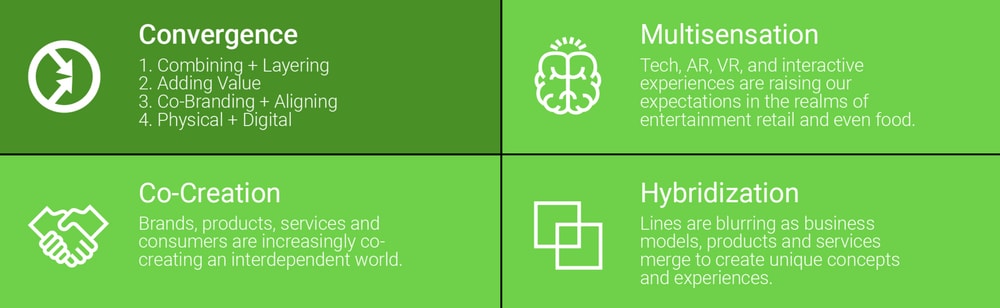
Convergence maps directly to three of Trend Hunter’s Megatrends:
- Co-Creation: consumers want to participate in shaping the brands they support
- Hybridization: the future belongs to blended experiences and category overlap
- Multisensation: consumers crave richer, layered experiences that engage more senses and dimensions
These Megatrends explain why Convergence is accelerating: people want offerings that feel more complete, immersive, and connected.
The Takeaway: Convergence as Ecosystem Innovation
Convergence is a reminder that innovation isn’t always about inventing something entirely new.
Sometimes it’s about combining what already exists in a way that creates new value.
Convergence is a repeatable strategy for:
- building hybrid products and experiences
- unlocking partnerships and new markets
- expanding consumer appeal through integration
- aligning multiple forces into one breakthrough offering
In a world where categories are blending and expectations are rising, Convergence is how brands build the future through collaboration. When paired with Trend Hunter’s broader methodology, the Patterns of Opportunity and Megatrends, Convergence becomes more than combination; it becomes a strategic pathway to what’s next.
To uncover breakthrough opportunities through collaboration, hybrid thinking, and ecosystem innovation, discover Trend Hunter’s Patterns of Opportunity Workshop and apply the framework directly.