What 17,500 Candy Buyers Taught Me About Innovation White Space
I just spent three days at the Sweets & Snacks Expo in Las Vegas, alongside 17,500 attendees and 1,000 exhibitors. I was there to present a brand-new keynote called "The Future of Impulse: When AI Shops For Us," and our team also pulled together a deeper trend analysis of the state of sweets and confectionery.
Rather than write another sprawling recap, I want to share what actually stuck with me. Two short lists and one strategic question at the end. If you run innovation or growth at a consumer brand, the question is the part that matters.
Three products worth looking up:
These won category awards, but more importantly, they tell you something about where consumer culture is heading.
1. Mashups Candy Salad Kit (1UP Candy). A literal candy salad: a pre-packaged kit that lets you build the TikTok trend at home. It won Novelty.
Think about what that represents: a viral social behavior compressed into a UPC. A meme with shelf space. This is the new playbook for impulse; it captures a cultural moment before it dissipates and permits people to participate offline.
2. Cinnabon Bakery Inspired Flavored Bacon Jerky (Wicked Cutz). Cinnamon roll flavor meets jerky. I went in skeptical and walked out with two bags. It won Meat Snacks, and not by accident.
Cross-category co-creation isn't new, but the boldness of the combination signals how far brands are willing to push to break through a saturated aisle.
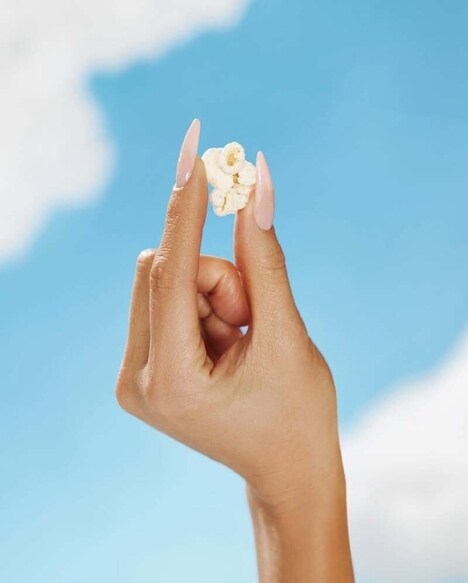
3. Raspberry Rose "Beauty + Glow" Popcorn (Belle's Gourmet Popcorn). Popcorn positioned as a beauty product, borrowing language straight from the skincare aisle. It won Trailblazer Snack.
The lesson isn't about popcorn, it's about category-jumping language. Success is what happens when a snack brand absorbs the vocabulary of a fundamentally different industry to create perceived value.
If you only have ten minutes this week, look up those three. They each represent a different vector of disruption: cultural compression, category collision, and language migration.
Two patterns that were everywhere:
If you walked the floor with your innovation lens on, two themes were almost inescapable.
Functional everything:
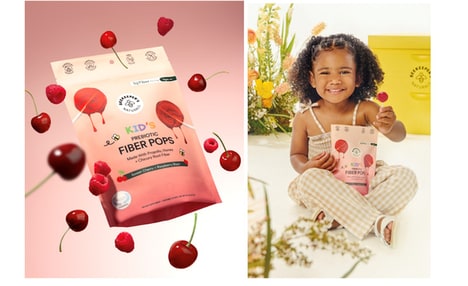
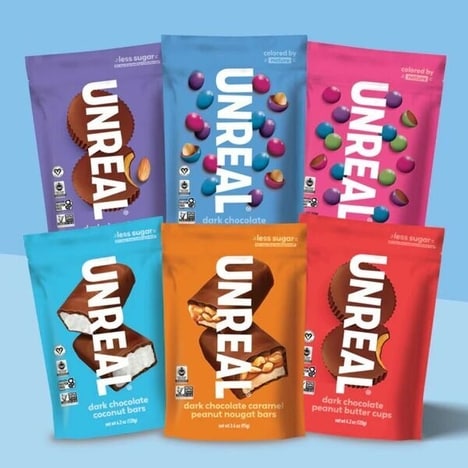
Protein, fiber, collagen, adaptogens, prebiotics, electrolytes. Every other booth was layering a functional benefit on top of an indulgence. If your innovation roadmap for 2027 still has "add protein to a candy" written on it, you should know you have a lot of company. A lot.
Nostalgia revivals:
Every dormant 80s and 90s brand has been dusted off. Warheads. Bubbilicious. Smarties. Brach's. Cinnabon.
If you can name a candy from your childhood, somebody at this show is bringing it back. The strategy still resonates with consumers, but the aisle is officially crowded.
A bonus pattern: sweet-and-spicy hybridization is at saturation. You couldn't walk ten feet without running into it.
So what: The strategic question:
Here's what I keep thinking about. Both of those macro trends — functional indulgence and nostalgia revival — are showing up everywhere at the same time. That's not a coincidence. The category is splitting its innovation energy into two clear lanes: "make the treat healthier" and "make the treat familiar."
Both lanes are valid. Both have proven consumer demand. And both are now extremely crowded.
This is the pattern I see across nearly every consumer category right now. When trend signals become this visible, they stop being competitive advantages and start being table stakes. The brands that win in 2026 and 2027 won't be the ones executing the loudest version of an obvious trend. They'll be the ones who saw the obvious lanes filling up and asked a different question.
So that's the question I'd push every innovation team to sit with this quarter:
- What are you doing in the lanes nobody else is crowding?
It's harder to answer than it sounds. The instinct, when you see competitors moving in a direction, is to move faster in the same direction.
But the floor of the Sweets & Snacks Expo was a vivid reminder that "moving fast in the obvious direction" is now the default behavior of the entire industry.
The white space isn't where everyone is sprinting. It's in the adjacent territories most teams haven't mapped yet; the cultural moments, the unexpected category bridges, the language migrations like what Belle's pulled off with their beauty-coded popcorn.
The Mashups Candy Salad Kit won because someone watched a TikTok behavior closely enough to package it, not because it added protein or revived a dormant brand. That's the kind of pattern recognition that compounds.
If you take one thing from my recap, take this: the most valuable innovation work right now is identifying which of today's "obvious" trends will be tomorrow's saturated aisle, and pre-positioning for what comes after.
Featured Articles