Beverage Is Racing Toward Functional. It Should Be Racing Toward Feeling.
$1.95 billion for Poppi. Billions more folded into BodyArmor and Topo Chico. Beverage companies are placing enormous bets on “functional” right now.
But you tell me - who is betting on a defined future state?
The Money Is Already Moving
These deals aren’t simply bets on taste. PepsiCo framed the Poppi acquisition explicitly around accelerating its shift toward “better-for-you” beverages.
Coca-Cola didn’t need BodyArmor and Topo Chico simply because the beverage aisle needed more competition.
They’re different bets, but they point toward the same broader shift: the next era of beverage growth will increasingly be shaped by what a drink does for you, not just how it tastes going down.
The numbers back it up. North American functional beverage sales sat around $58 billion in 2025 and are projected to climb toward $83 billion by 2031, with mood support emerging as one of the stronger-growing subcategories heading into 2026 [Mordor Intelligence, via Fast Company].
Flavor science is catching up too. IFT’s Outlook 2026 flavor report flags “neuroflavor” - beverage experiences designed around mood, cognition, and emotional state - as one of the defining trends of the year [IFT]. This veers away from our historical notions, where, previously, beverages largely competed on taste. Then increasingly on function: energy, hydration, gut health, sleep, focus.
Notice where this is happening first, though. Not alcohol. Wellness-adjacent functional beverages and, increasingly, non-alcoholic ones.
Alcohol Is Playing a Different Game
Alcohol brands are moving too… just not toward exactly the same finish line. Much of the activity is about reducing: proof, calories, hangovers, category risk. Far less of it is about redirecting consumers toward a named emotional destination.
AB InBev has grown its no- and low-alcohol portfolio by 60% since 2019, with volumes up more than 23%, and has rolled out zero-proof versions of flagship brands. Campari has made non-alcoholic aperitifs a real pillar of its strategy [Just Drinks].
Non-alcoholic spirit and cocktail brands are multiplying fast enough that trade press now treats the category as mainstream shelf space rather than a novelty. The consumer pressure behind this is real and generational. A Harris Poll found Gen Z restaurant-goers order beer, wine, and spirits noticeably less often than Millennials do, while IWSR is forecasting non-alcoholic products will become the second-largest beer category this year [Harris Poll / IWSR, via Brand Innovators].
Calabasas Beverage Company CMO Kathleen Braine put it well heading into 2026: alcohol marketing is increasingly coming down to authenticity, with consumers prioritizing real connection and more deliberate, intentional consumption [Brand Innovators]. But look at how many of these non-alc launches still talk about themselves.
It’s often flavor-replication language: tastes like a Negroni. Clean, crisp lager, without the after-effects. Or it’s occasion language: something for the dinner table. Something to hold at the party. Much less of it explicitly names the feeling you’re trying to land on twenty minutes from now. Alcohol, of course, has always sold feeling. It has just tended to do it indirectly. The nightcap. The champagne toast. The cold beer after work. The martini at the bar.
Alcohol built a century of marketing around the moment: the clink of ice, the golden hour, the people around the table. Even as the industry reinvents itself through “no and low,” much of it is carrying that same present-tense instinct along with it.
And this raises a fascinating question for alcohol brands specifically. Wellness beverages can say “this will calm you down” pretty directly. Can an alcohol brand say the same thing about a drink with proof in it, or does that begin to read as an implied health claim the second a regulator or responsible-marketing lawyer looks at it?
There’s a difference between “unwind with a Johnnie Walker” living as a cultural intuition and a brand printing “for calm” on a label next to an ABV number. So how far into explicit emotional-state language can a proof brand actually go before it runs into the same scrutiny that has helped keep the category talking about occasions instead of outcomes?
The Vocabulary Gap Is the Opportunity
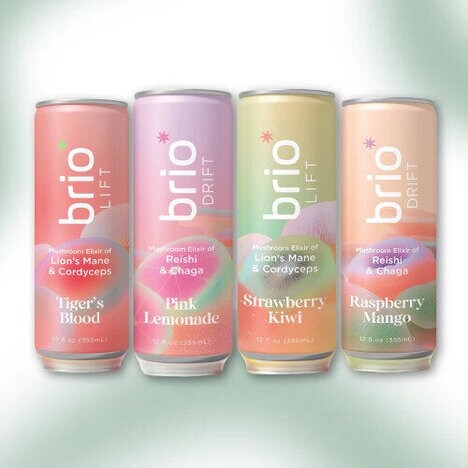
The functional and wellness side of the industry has already started building a vocabulary for naming emotional outcomes: calm, focus, uplift, ease. Brands like Soul Hum Elixirs, Mingle Mood and BRĒZ aren’t just formulating around a state. They’re marketing it out loud. And consumers appear increasingly receptive to that proposition. Mood-coded beverages are up 42% in dollar growth, with stress reduction and relaxation among the top consumer need states driving the category [Beverage Daily]. More than half of US consumers say they’re willing to pay more for beverages that support their wellness goals [EY Consumer Beverage Survey], while roughly 8 in 10 Gen Z and Millennial consumers call mood-supporting ingredients essential rather than a nice-to-have [GlobalData].
Alcohol has the emotional intuition already: Unwind. Celebrate. Connect. Escape. Indulge. But it tends to keep the destination implicit. Maybe it has to. Maybe that’s regulation. Maybe it’s responsible-marketing caution. Or maybe it’s simply a hundred years of category habit. Either way, it leaves a vocabulary gap. And how long does that window stay open?
Once “state-based” language hardens into how beverage categories talk about themselves, the brand that says it first (clearly, credibly and specific to an occasion) has a real shot at owning that mental model. Everyone else is playing catch-up in someone else’s vocabulary.
The Open Question
We’ve been tracking this closely at Trend Hunter. We call it State-Based Social Choices, and it’s currently one of the stronger signals coming through our data on the Personalization Megatrend.
We recently built out a full set of recommendations around it for a client in the beverage space, from how to test occasion-based positioning to where partnership opportunities sit with credible functional brands already fluent in this language.
I keep coming back to the same question:
Is the winning move here formulation, or is it just saying out loud what consumers already believe?
My read is that most brands will chase the ingredient stack when the real prize is finishing the sentence consumers are already forming in their own heads. Not "what do I want to drink." "Who do I want to be in twenty minutes." Beverage has spent a hundred years selling the moment. Curious whether people think the next round actually goes to whoever sells the destination instead, or if that's a step too far for how people actually shop.