When AI Builds the Basket
When you think about retail and technology, you probably think about how technology has helped us access more choice. The supermarket gave us more products in one place. Ecommerce gave us virtually unlimited shelves. Search engines made those shelves navigable. Recommendation engines helped narrow them down. But the next generation of retail technology is doing something fundamentally different. It isn't giving us more choice; it's beginning to make sense of those choices for us.
Instead of searching for individual ingredients, imagine telling an AI assistant:
“I need dinner for four. One person is vegetarian. Keep it under $30 and make sure I can cook it in 20 minutes.”
The technology doesn't simply return search results. It interprets the problem, considers preferences, constraints, price, availability and context, and begins constructing the basket. For years, digital retail has been built around helping humans navigate products. Now, we're beginning to build systems that can navigate products on our behalf.
That presents a new question for brands: How does the system decide which products the consumer should consider at all?
Retail Is Developing a New Decision Layer
One of the clearest places to see this shift is grocery. The traditional grocery trip was built around the stock-up: consumers planned what they needed, travelled to the store and filled a large basket intended to last for days or weeks.
Digital grocery can increasingly support smaller, more immediate missions: Dinner tonight. Missing ingredients. Meal prep. Entertaining friends. A craving. A last-minute top-up.
Same-day services represented 45.35% of North America's online grocery delivery market in 2025. And despite resistance to delivery fees, 88% of shoppers say they're willing to pay for same-day delivery when convenience matters.
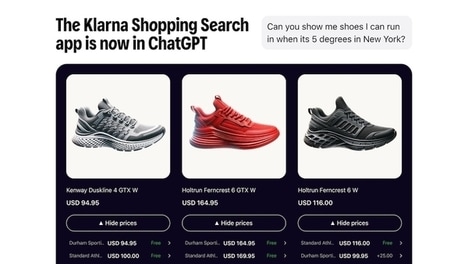
But speed is only part of the story; technology is also reducing what consumers need to do before placing the order. Instacart has integrated AI to suggest products and build baskets around meal ideas and specific grocery missions. Glovo has introduced pre-built lists for occasions like “movie night” and “BBQ.” Uber Eats can turn prompts, recipes or even images of shopping lists into editable grocery carts. Each example removes another piece of work from the consumer.
Search engines organize information. Recommendation engines rank possibilities. AI assistants can increasingly interpret intent and translate it into action. The shopper no longer needs to translate “I want tacos tonight” into tortillas, protein, seasoning, salsa and toppings. The system can do that for them.
From Search-and-Select to Predict-and-Prepare
This represents a bigger shift than better recommendations.
Traditional ecommerce largely replicated the logic of a physical store:
- Consumer → Search → Products → Comparison → Basket
- AI creates the possibility of a different journey:
- Consumer → Need → AI/Platform → Solution
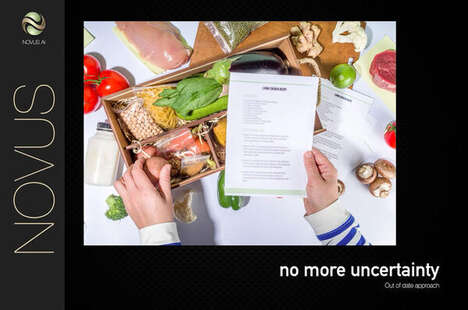
Trend Hunter describes this as moving from “search-and-select” toward “predict-and-prepare.” AI can interpret preferences, dietary needs, budgets and occasions to assemble solutions rather than simply recommend individual products. And grocery is only one environment where this logic could apply.
Travel becomes: “Give me a three-day warm-weather trip under £600.”
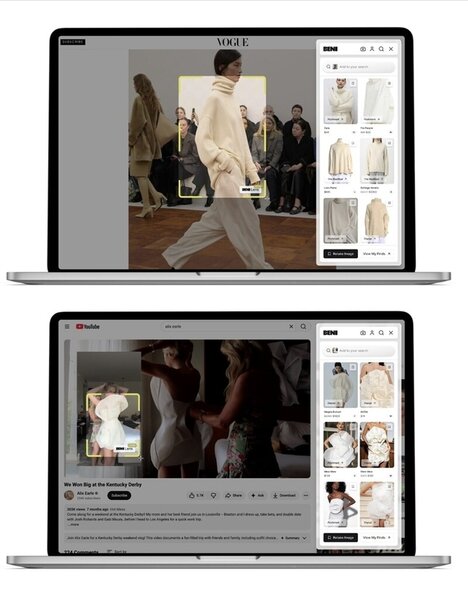
Fashion becomes: “I need something for a semi-formal wedding in Italy.”
Home improvement becomes: “I want to repaint this room in this style.”
The traditional digital interface requires consumers to understand what they need to buy. An intelligent interface only requires them to understand what they're trying to accomplish.
Algorithmic Visibility Is the New Shelf Presence
For decades, brands have learned how to communicate with humans. Packaging catches the eye. Brand assets create recognition. Product descriptions communicate benefits. Advertising builds familiarity. Search optimization makes products easier to find. None of that disappears. But brands now have another audience: the systems deciding what gets surfaced.
If an AI is assembling a basket, it needs to understand more than the product name. It needs context: occasion, diet, pairing, cuisine, budget and need. Products with richer data and clearer contextual cues may be easier for these systems to understand and surface. This creates a new kind of retail visibility: algorithmic visibility.
For the first time, brands may need to think seriously about being legible to machines as well as memorable to humans.
From Ranking Higher to Becoming the Answer
Retail optimization is shifting from:
“How do we rank higher?”
to:
“How do we become the obvious answer?”
Consumers want AI to make shopping easier, but not necessarily to make every decision for them. The opportunity is assisted choice: reducing the work required to reach a good decision while keeping the consumer in control.
When Digital Commerce Reshapes the Physical Product
As AI and ecommerce become infrastructure, products themselves have to adapt. Packaging is already a clear example. It no longer needs to perform only on the shelf; it must also work across warehouses, automated fulfilment and delivery networks. In 2025, 11% of Amazon packages globally shipped without additional Amazon packaging, signaling a shift toward packaging customized for the fulfilment network.
Tomorrow's products increasingly need to work for three audiences:
The consumer has to want it.
The algorithm has to understand it.
The platform has to move it.
The Shelf Isn't Disappearing; Its Monopoly on Choice Is
Consumers will still browse, discover and impulse buy. But intelligent systems will increasingly sit between wanting something and buying it. A recipe discovered on social media can become an AI-generated basket, populated by a retailer and delivered through an automated fulfilment network.
For brands, that creates a new requirement: be desirable to people and legible to machines.
Because in AI-mediated retail, being the best product on the shelf won't matter if you never make it into the basket.